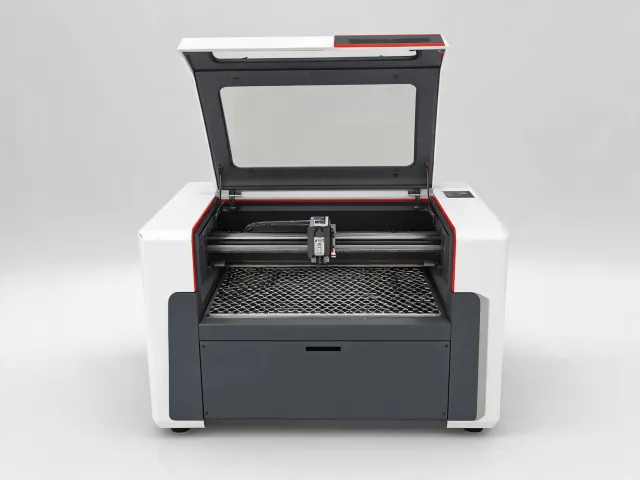
Fusion Maker
Compact CO₂ workflow for prototyping, personalization, classroom labs, and short-run fabrication where bench footprint matters.
Review catalog →
Move from artwork to a repeatable laser process by matching wavelength, work area, extraction, and fixture strategy to the part—not to a generic speed claim.
Each family should be evaluated with representative material, final artwork, and the extraction arrangement intended for production.
Compact CO₂ workflow for prototyping, personalization, classroom labs, and short-run fabrication where bench footprint matters.
Review catalog →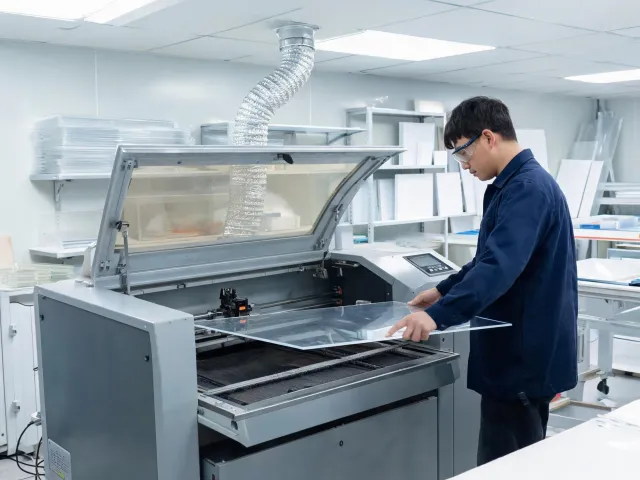
Mid-format platform for mixed engraving and cutting queues, with room for fixtures, rotary work, and nested sheet jobs.
Review catalog →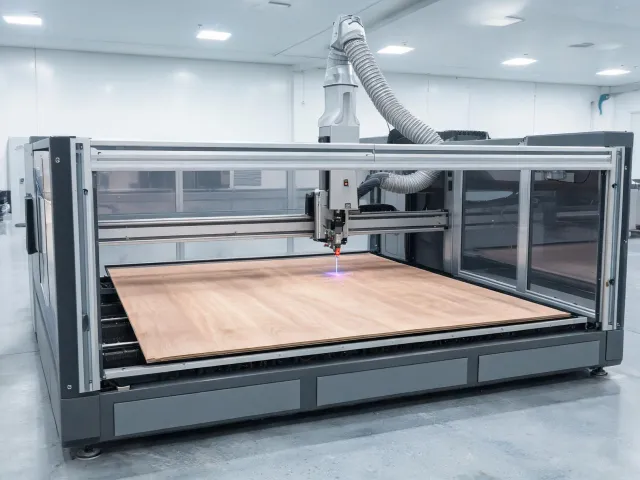
Larger work-area option for production teams balancing panel size, job changeover, operator access, and throughput planning.
Review catalog →Final capability depends on the selected source, lens, material chemistry, thickness, artwork density, extraction, and maintenance state. Published model data must be checked on the current datasheet.
CO₂ sources are commonly selected for many organic materials and acrylic; fiber sources are used for compatible metals and engineered plastics. Coatings and additives can reverse assumptions, so confirm with a coupon.
No setting is universal across material batches, optics condition, focus, and extraction. Treat published values as starting points and approve a matrix on the actual stock.
Higher available power may support faster processing, yet fine detail, heat-affected edges, smoke deposition, and motion limits can set the practical boundary.
Send the final material, representative geometry, smallest required text, artwork file, target finish, quantity, and any fixture or rotary constraint.
Share a representative coupon, artwork, part envelope, finish target, and expected batch size. The resulting discussion can focus on wavelength, work area, ventilation, and process risk.